
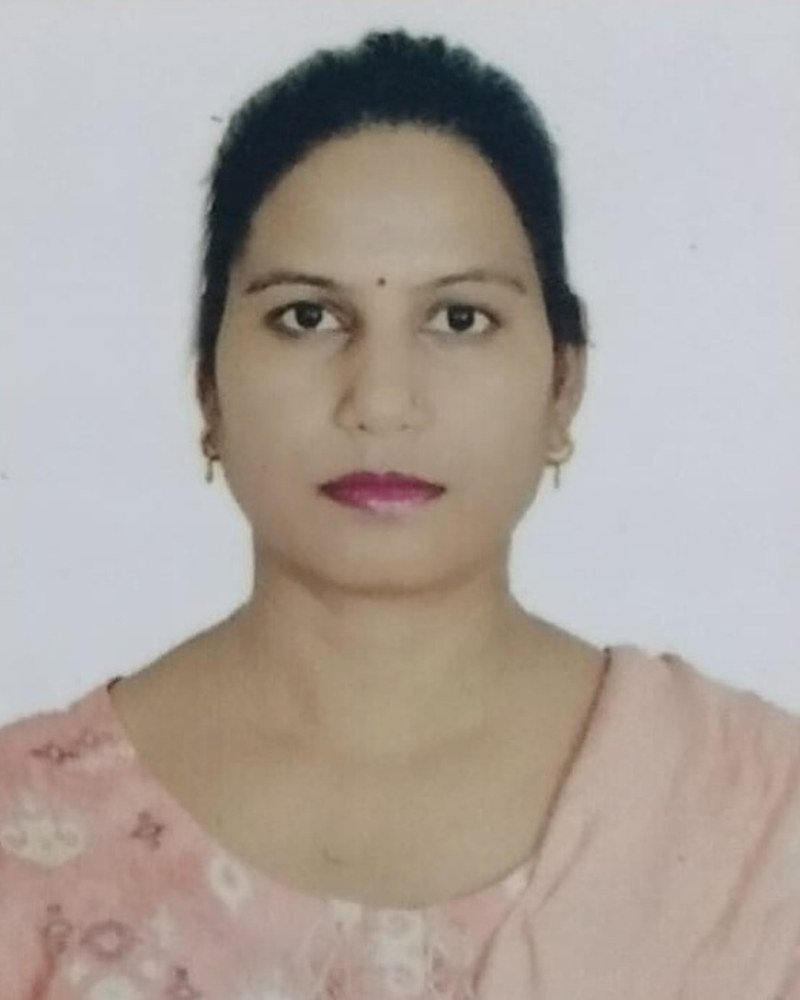
Kranti Udaya
A field research and survey professional whose experience has been built across national household surveys, public-health studies, longitudinal research and multi-state development-sector assignments.
Since beginning field research work in 2010, Kranti has worked at different levels of survey execution — from data collection and documentation to field supervision, team management, planning, quality checks and reporting. At MFRS, she brings that practical field understanding alongside her formal responsibility as a Director of the company.
← Back to Our TeamMore than a decade in the field changes how you look at a survey.
A questionnaire may be finalised in an office, but its real test begins when a field team has to use it across villages, cities, institutions and households. Kranti’s professional background has been built on that side of research — where planning, people, data quality and ground conditions meet.
A career built one field assignment at a time.
Kranti’s field experience began with the Annual Health Survey, where her work included supervision, data editing, data management and documentation. It was an early introduction to a kind of work where accuracy is not something that can be added at the end.
The years that followed took her through multiple rounds of the National Family Health Survey and other public-health and development-sector studies. She has worked in both urban and rural settings and has collected information from households, health facilities, Anganwadi centres, schools and community institutions.
Her responsibilities gradually expanded beyond data collection. Field supervision brought responsibility for people as well as data: preparing field plans, guiding teams, reporting progress, coordinating movement, carrying out checks and dealing with the practical issues that appear once fieldwork begins.
Her later assignments added longitudinal household research, institutional data collection, gender-oriented studies, agriculture-related work and rural employment verification to that experience.
Data & Documentation
Early experience in data editing, data management and maintaining documentation around large survey operations.
Household Research
Field data collection in both rural and urban communities across health, family, education, employment and development studies.
Field Supervision
Team management, field planning, reporting and supervision across assignments involving multiple districts and states.
Quality & Coordination
Practical field checks, team support, reporting and coordination required to keep data collection on track.
Experience across households, institutions and communities.
Her work has required different approaches depending on who is being interviewed and where the information has to be collected. That variety is important in field research: a household survey, a health facility visit and an institutional interview cannot simply be managed in the same way.
Household Surveys
Urban and rural household data collection across large national surveys and development-sector research.
Field Supervision
Leading field teams, planning daily movement and keeping execution aligned with assignment requirements.
Team Management
Working directly with field personnel, supporting execution and managing practical issues during data collection.
Field Planning
Preparing practical plans around geography, team movement, respondents, institutions and field timelines.
Data Quality
Experience with field-level checking, data review, documentation and reporting processes intended to identify problems early.
Institutional Surveys
Data collection from schools, hospitals, health facilities, Anganwadi centres, police stations and other institutions.
Community Coordination
Working in field settings involving Sarpanches, Panchayat-level functionaries, ward representatives and community respondents.
Reporting
Preparing and communicating field progress, team status and assignment-related information to the relevant project structure.
Field Logistics
Practical experience organising team movement and other logistical requirements needed for multi-location fieldwork.
The assignments tell the story better than a list of adjectives.
The projects below are selected from Kranti’s earlier professional experience. Together they show work across large household surveys, health and social research, institutional data collection, longitudinal studies and field supervision.
Annual Health Survey (AHS)
Kranti’s early professional experience included a fifteen-month engagement on the Annual Health Survey. Her responsibilities included supervision alongside data editing, data management and documentation.
- Supervision within the survey operation.
- Data editing and data-management responsibilities.
- Survey documentation and supporting records.
National Family Health Survey (NFHS)
Her professional history includes work across multiple rounds of the National Family Health Survey in different states and through different research organisations.
- Urban and rural household data collection in Madhya Pradesh.
- NFHS-4 field data collection in Uttar Pradesh.
- NFHS-5 fieldwork in Gujarat.
- Later NFHS-5 work in Uttar Pradesh as Field Supervisor.
- Field planning, team management and district-level reporting responsibilities in the supervisory role.
Multi-Project Research Fieldwork
Worked across several research projects over an extended period, collecting information in settings that included households, hospitals and Anganwadi centres.
- Household-level field data collection.
- Visits to hospitals and health-related institutions.
- Anganwadi-centre data collection.
- Experience working with different respondent and institutional environments within the same broader research portfolio.
Madhya Pradesh Police Research Assignments
Worked on research involving the Madhya Pradesh Police, including a baseline assignment requiring visits to police stations and discussions around the URJA Desk initiative, followed by an online midline survey during the COVID-19 period.
- Police-station level field engagement.
- Baseline survey data collection.
- Online midline survey activity.
- Team leadership, supervision and reporting responsibilities.
Multi-State Development Research
Worked across multiple research topics and geographies, including assignments connected with child health, nutrition and the handicraft sector.
- Data collection across different study subjects.
- Field supervision and team leadership.
- Progress reporting and field coordination.
- Experience adapting to different states and respondent groups.
Family Planning Research — Round 2
Worked as Field Supervisor across Dholpur, Bharatpur and Alwar districts in Rajasthan on a family-planning research assignment.
- Field-team management.
- Data reporting.
- Spreadsheet-based field work and records.
- Supervisory responsibility across multiple districts.
India Human Development Survey — Round 3
An eighteen-month field-supervision assignment spanning Haryana, Himachal Pradesh, Rajasthan, Madhya Pradesh, Delhi and Jammu & Kashmir. The longitudinal nature of the study required returning to families and communities to understand how circumstances had changed over time.
- Led field teams across multiple states and different operating environments.
- Data collection from selected households and communities.
- Work involving government and private schools.
- Work involving government and private hospitals.
- Community-level interaction with Sarpanches, Panchayat Secretaries, GRS and ward representatives.
- Collection of information related to health, education and employment.
- Field planning, reporting and practical team logistics.
PRADAN-Related Development Research Assignments
Supervised field assignments across different development themes, including gender orientation, agriculture and rural employment.
- Approximately six months of gender-orientation related fieldwork in Madhya Pradesh.
- Agriculture-related fieldwork in Uttar Pradesh.
- MGNREGA job-card related fieldwork in Madhya Pradesh.
- Team management and field supervision.
- Data collection involving Sarpanch-level interaction.
- Reporting to the relevant field-monitoring structure.
Different subjects. The same need for careful fieldwork.
Her experience is not limited to one programme or respondent type. The assignments in her professional background have required working across several social and development-sector contexts.
Director
Kranti is a Director of MFRS INDIA PRIVATE LIMITED. Alongside that formal position, she brings to the company the perspective of someone who has spent years working directly inside survey and field-research environments.
Governance informed by field experience.
Her professional background gives her practical familiarity with what field teams actually encounter — respondents who are unavailable, institutions that require coordination, routes that change, data that needs checking and teams that need clear direction. That experience provides useful field context alongside her responsibilities as a Director of MFRS.
- Company leadership. Serving as a Director of MFRS INDIA PRIVATE LIMITED.
- Practical field perspective. Bringing years of first-hand survey and supervisory experience into discussions around field-oriented assignments.
- Understanding team realities. Experience of working both as part of field teams and in supervisory positions provides a practical view of deployment and team management.
- Quality awareness. Her background includes data management, documentation, field checks and reporting — areas that directly affect the reliability of field research.
- Respondent and institution experience. Having worked with households, communities, schools, hospitals, Anganwadi centres, police stations and local institutions across different studies.
Good fieldwork is usually less dramatic than people imagine.
Much of it comes down to doing ordinary things properly: reaching the right respondent, asking the question as intended, keeping the team informed, checking work while correction is still possible and documenting what actually happened.
Plan before deployment
Field plans need to account for geography, institutions, respondent availability and the practical movement of a team.
Stay close to the team
A supervisor needs to know what is happening while data collection is underway, not only when the final numbers arrive.
Check while it can be fixed
A field problem identified early can often be corrected. The same problem discovered after the team has left the location may not be.
Understand the respondent
Household members, health workers, teachers, police personnel and local representatives each require a different field approach.
Report what happened
Useful reporting is not only about completed targets. It should also make delays, field constraints and unresolved issues visible.
Keep records usable
Field notes, data, progress records and documentation should remain understandable after the team has moved to the next location.
Social-sector education alongside long field exposure.
Field experience is useful when it changes how the next assignment is handled.
Kranti brings to MFRS a long working familiarity with household surveys, field teams, institutions, reporting and the practical conditions in which research data is collected. As a Director of the company, that experience gives MFRS another senior perspective grounded in fieldwork rather than only in plans and proposals.